



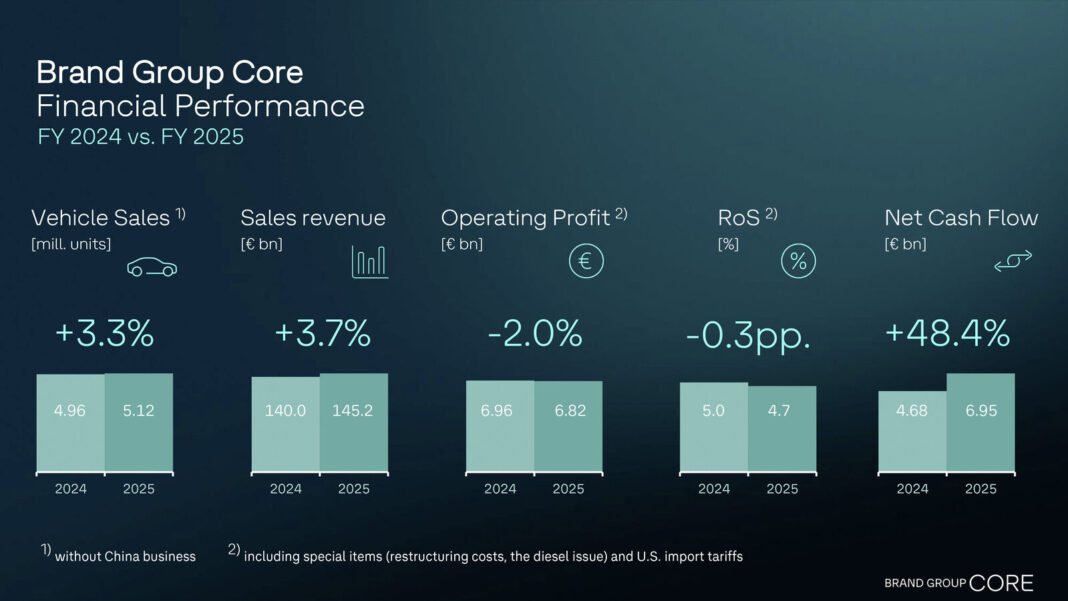
In 2026, the Brand Group Core will continue to pursue its consistent course towards closer cooperation and increased efficiency. Efforts will focus on optimizing cross-brand processes and expanding joint initiatives.
The new steering model strengthens overarching management, while the brands preserve their clear identity for customers. Going forward, the increase in cross-brand development scope will raise the efficiency level of the BGC’s total investment. The basis for this will be a leaner, more efficient “powerhouse” with closer cooperation in production, procurement and development.
A central project for the Brand Group Core in 2026 is the Electric Urban Car Family with four models from the Volkswagen, CUPRA and Škoda brands debuting on the market, making e-mobility even more affordable for many customers.
The starting price for the Volkswagen ID. Polo will be around 25,000 euros – the CUPRA Raval and Škoda Epiq will target additional customer groups. From their base in Spain, SEAT&CUPRA will lead this joint project. Compared with the previous approach, development of the cross-brand platform brings savings of some 650 million euros over the term of the project. It is planned to produce several hundred thousand units per year. The economies of scale achieved in this way will close the margin gap between BEVs and ICEs still further.
The newly-structured Brand Group Board of Management that came into effect in January 2026 will make processes, structures and decision-making paths significantly leaner.
Clear responsibilities and faster decision-making processes strengthen the Brand Group’s competitiveness. The new governance has an impact on the Production, Technical Development and Procurement units in particular.
In Production alone, the approved reorganization of the steering model unlocks cumulative savings potential of one billion euros through 2030.
Going forward, the new regional managers will be responsible for cross-brand and cross-national planning, steering and logistics. This will make the regions more independent, more efficient and more flexible.
Cross-brand projects also increase efficiency in development: duplicated development work is avoided, development cycles are shortened and budget funds are allocated more effectively – while maintaining consistent quality and clear brand differentiation. At the same time, the Brand Group Core is strengthening its global competitiveness in 2026 by optimizing sales performance, improving working capital and designing an after-sales plan to increase service profitability.
In parallel, the Volkswagen brand is launching the largest model initiative in its history under its “Volkswagen Boost 2030” strategy. The package of measures comprising the performance program and the 2024 wage agreement lays the foundation for a stable earnings situation and a return on sales of more than 4% in 2026.